


Opportunities for friendships
Friendships are one of the key concerns of children and young people moving schools. This element focuses on creating opportunities for friendship, supporting pupils to build positive connections and a sense of belonging within the new school community.
Key information
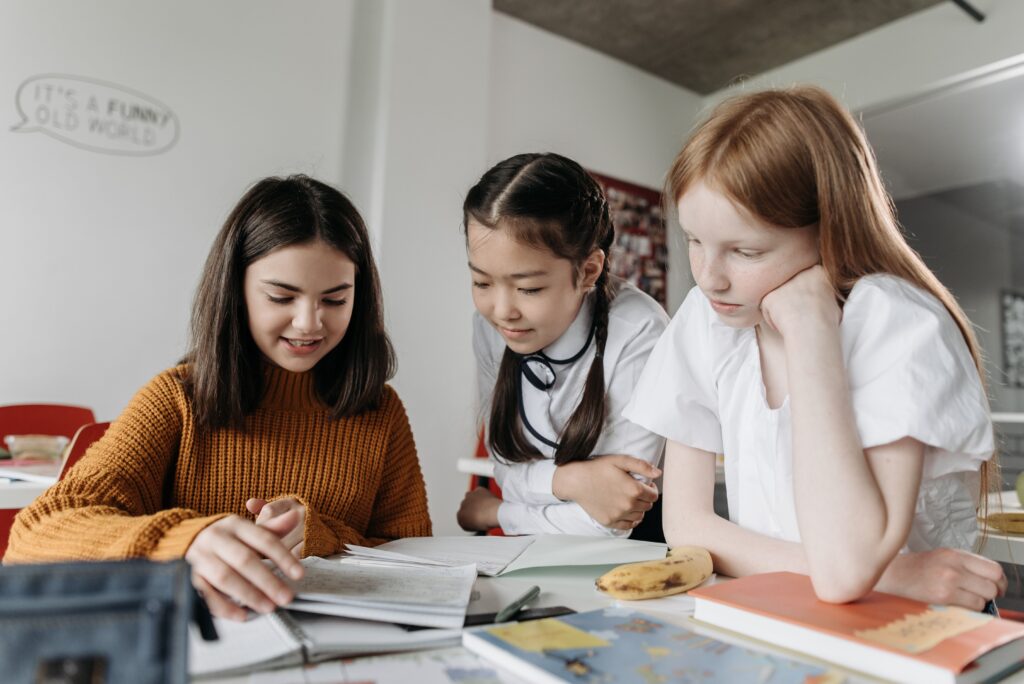
New friendships
Making friends is often a top priority after a school move, and some children and young people may worry about making new friends or fitting in. Children will vary in their experiences of making friends, due to age and differing personalities, and it might take time to make friends and feel belonging within a setting. This poses challenges for children moving school, in particular for those who move often. Furthermore, the dynamics of schools and classrooms may be impacted by frequent mobility, posing challenges not just for the children moving but also those ‘left behind’ (see study in New Zealand by Bullen et al., 2024).
Children and young people may feel sad about leaving their friends behind at their previous school, which can also be a significant reason why they may not want to move. On the other hand, negative friendship experiences or (unresolved) bullying were also highlighted by families as an important reason for school moves.
Developing relationships
Feelings of belonging to the school community form an important basis for friendships, engagement and self-confidence. Relationships with teachers and staff also play an important role for belonging, and a particular role for children and young people who may have experienced discontinuity in their relationships.
Belonging is a key theme in the Government’s Every Child Achieving and Thriving policy document, which specifies that by 2029, every school will be expected ‘to monitor pupils’ sense of belonging and engagement, so that more children – including those who are disadvantaged or have SEND – will feel a sense of belonging in school’ (p. 62).
Belonging is also recognised in the Ofsted Inspection toolkit, where one of the indicators for inclusive personal development and wellbeing is ‘pupils feel welcome, valued and respected and that they belong within the school community’ (p. 49).
And there is a pattern there, that children who move more become suspended more from school. And I think that demonstrates that there’s a lack of relationship that potentially isn’t there, because they haven’t had the opportunity to build that up with staff or when they have had relationships with long-term school staff and then had to move, it can be really difficult to want to start that again, to share your life story again, to trust that that person is going to be there in four weeks when it wasn’t there before… I think, with a number of our young people that it’s just another school, there will be more in the future and it’s really disheartening. We advocate strongly for relationships.
(Amy, Virtual School Head)

Practical suggestions to support friendships of pupils moving school
The following practical suggestions have been identified by families, schools and local authorities participating in the School MOVES study, as helpful in supporting friendships for children and young people who move school.
- Establishing a buddy system to ensure new pupils have a key contact when they start. Buddies are often chosen carefully to support the new pupil’s integration into the school community (e.g. through common interest in sports, similar temperament) and may lead to long-term friendships.
- In the case of younger children, ensuring they have someone to play with at break time, to avoid them feeling isolated.
- Where possible, funding extra activities, such as school trips or breakfast clubs, to ensure the child or young person can join and get to know their peers.
- Encouraging participation in other school activities, such as sports and music to help facilitate friendships.
- Encouraging new pupils to become part of pupil leadership groups (e.g. eco-team, pupil ambassador, safe-guarding kids).
- Having anti-bullying ambassadors to support the school climate and classroom environment.
- Strengthening practices to foster strong pupil-staff relationships.
 Previous
